Students (Current and Recently Graduated) and Faculty Represent Truman at Missouri Conference on History in Kansas City

Professor Marc Becker, Department of History, chaired a session on “Imperialism and Resistance in Latin America” at the Missouri Conference on History held in Kansas City, Missouri, March 6-8, 2019. On the same panel, History major Shannon Fetzner delivered a paper entitled “Assimilation, Resistance, or Both? Indigenous Responses to Christianity in Colonial Peru.”
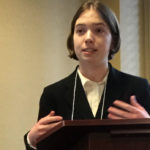
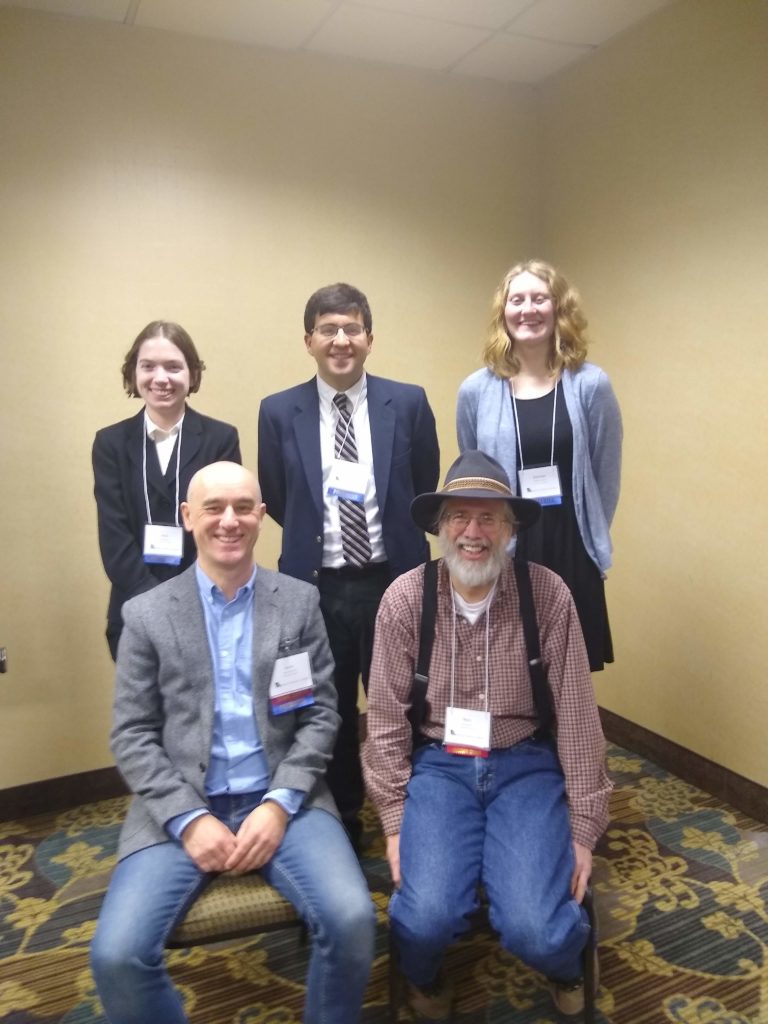
On the session “Otherness and Othering in Diverse Settings and Contexts,” Truman was represented by current student Anne Morgan, whose paper “Modernizing Migrants: Truman’s Commission on Migratory Labor and an ‘American Standard of Living’” was based on research conducted during a summer internship at the Harry S. Truman Presidential Library and Museum in Independence, Missouri. Participating on the  same panel were recent Truman graduate Houston Roberts, with a presentation based on the capstone paper he prepared under the supervision of Professor Torbjorn Wandel and entitled “Birth of a Klavern: The Rise of the Ku Klux Klan in St. Joseph, Missouri, 1921–1925,” and Dr. Jason McDonald, Department of History, with “Nature or Nurture? The Making of the Eugenicist Harry Laughlin.”
White House Decision Center

On 4 March 2019, the HIST 367, Life and Presidency of Harry S. Truman class visited the White House Decision Center at the Harry S. Truman Library and Museum in Independence, Missouri. They participated in the Korean War simulation. They opted for American involvement in the conflict, but against crossing the 38th Parallel or dropping atomic bombs on China. If only they were running things in the nation’s capital today.

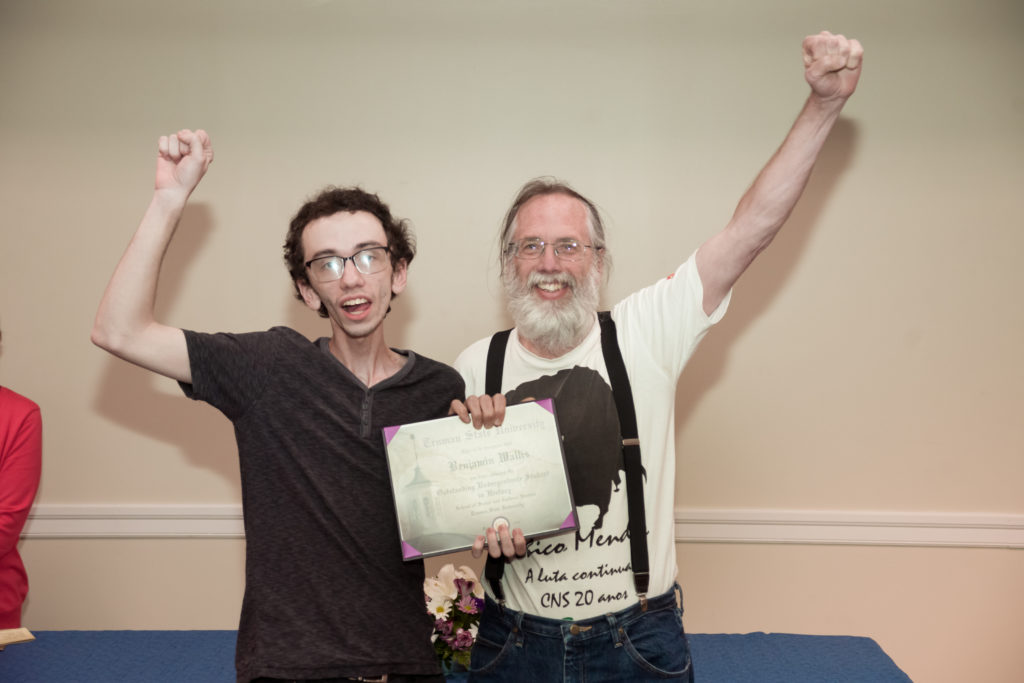
Ben Wallis received history academic honors

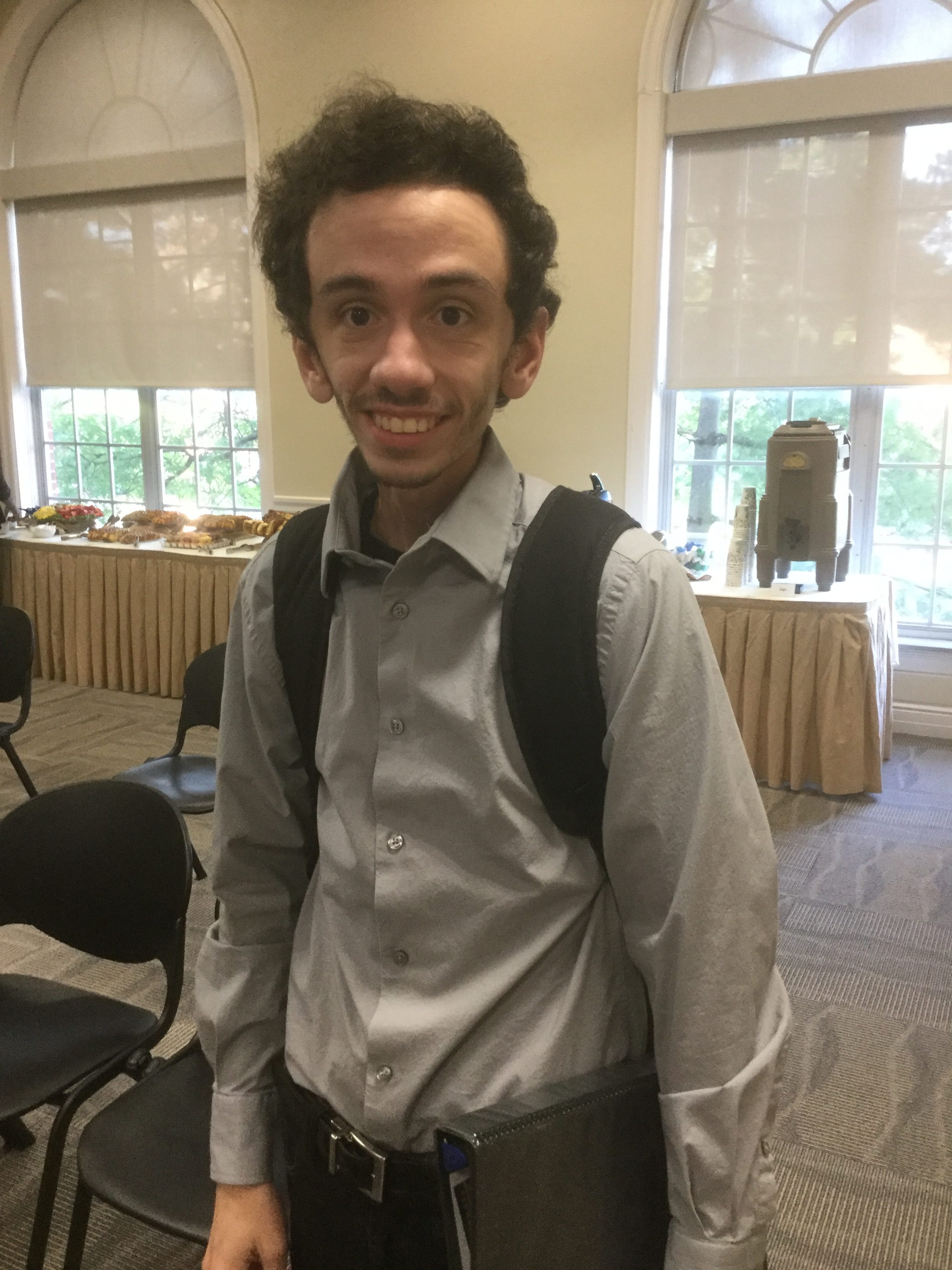
Graduating senior and double history and political science major Ben Wallis received the Outstanding Student Award in history at the May 11, 2018 academic honors awards ceremony. Wallis was a 2017 recipient of a TruScholars award, and was a preceptor in two student-initiated courses,”Understanding the Black Lives Matter Movement” (Spring 2017) and “Introduction to the Marxist Theory of Capitalism” (Spring 2018). His senior seminar research project was “The Moving Contradiction: The Status of Marxism in the Black Panther Party.” Wallis was also a leader of Truman’s chapter of Students for a Democratic Society (SDS).

Ben Wallis Academic Honors

Cuba Student Panel

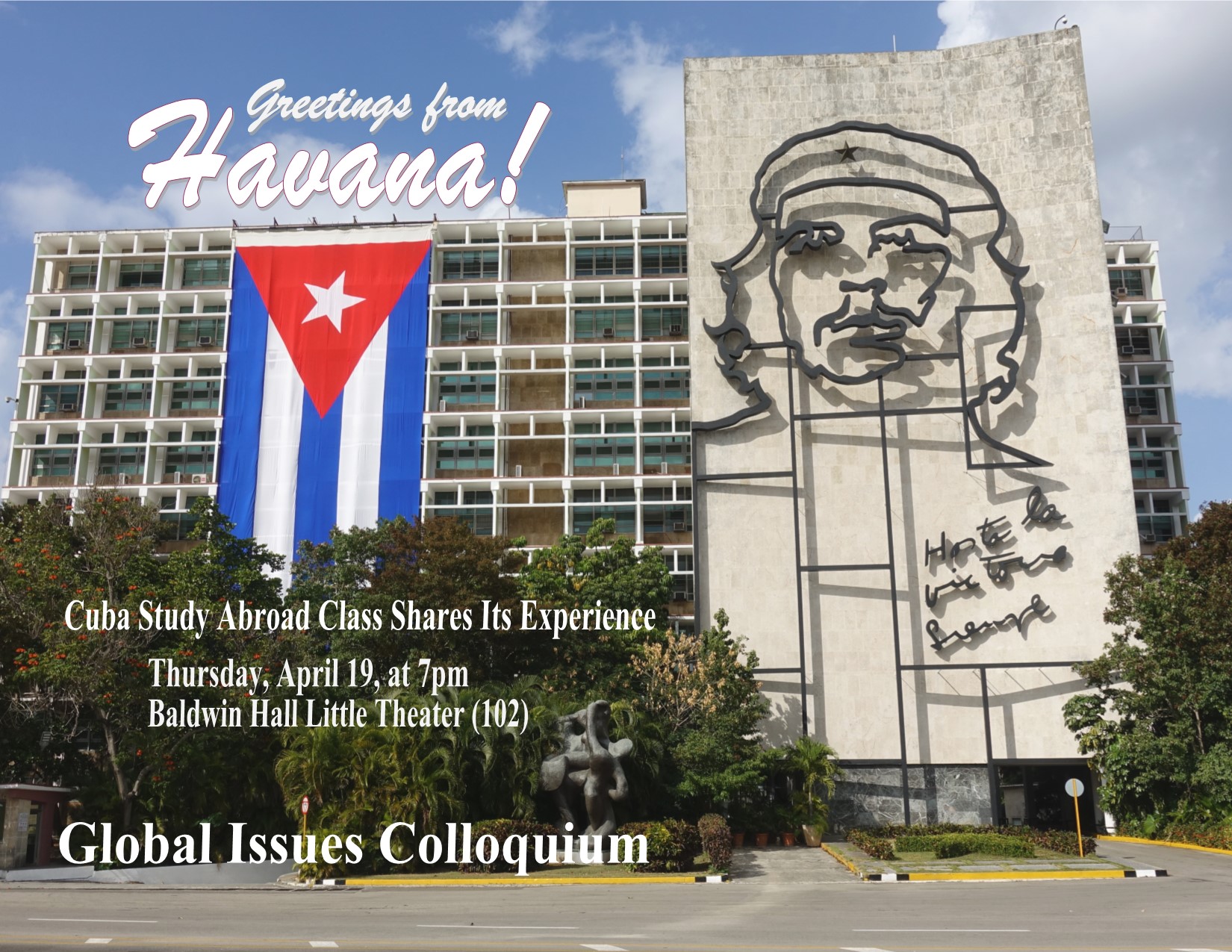
On Thursday, April 19, 7pm, in Baldwin Hall Little Theater (BH 102), students from a Spring Break Study Abroad trip to Cuba will present on their experiences.

Topics will include a discussion of gender, race, US-Cuba relations, healthcare, education, elections and political systems, infrastructure, agriculture, and capitalism vs. Cuban socialism.

This presentation is part of the Global Issues Colloquium that is designed to provide new perspectives on issues that impact our global community.

Please come with questions and curiosity!

Cuba Study Abroad

Spend Spring Break in Cuba!

Revolution CubaHistory professor Marc Becker is offering a new study abroad opportunity to learn about the history and contemporary events in Cuba.

During the midterm break (March 10-18, 2018), students will have a unique opportunity to travel to Cuba to take a close look at issues of global economics, conflict and peace, race, culture, the environment, and U.S. relations.

Participants will examine Cuban national priorities, such as universal education and health care; visit schools, museums, cultural and historical sites; discuss with Cubans the effects of recent changes in U.S. and Cuban relations including the longstanding U.S. embargo on Cuba; travel to the Che Guevara Mausoleum at Santa Clara; learn about Cuba’s history of sugar production and slavery; and experience the sights, sounds, and tastes of old Havana, its neighborhoods, and the surrounding countryside.

Information sessions on this intensive international learning experience will be held on Wednesday, November 15, 3:30 p.m., MC211 and Thursday, November 30, 5 p.m., MC209.

Students can earn one credit for this study abroad experience (CUB 310). The course is open to all majors, and has no prerequisites or language requirements. The course runs parallel to Latin American Revolutions (HIST 391), but enrollment in that class is not a requirement.

Applications and a $350 non-refundable deposit are due by Friday, January 19, 2018.

For more information and an application go to http://witnessforpeace.org/event/revolutionary-cuba/ or contact Marc Becker, MC 227, marc@truman.edu, x6036.

History majors present at TruScholars

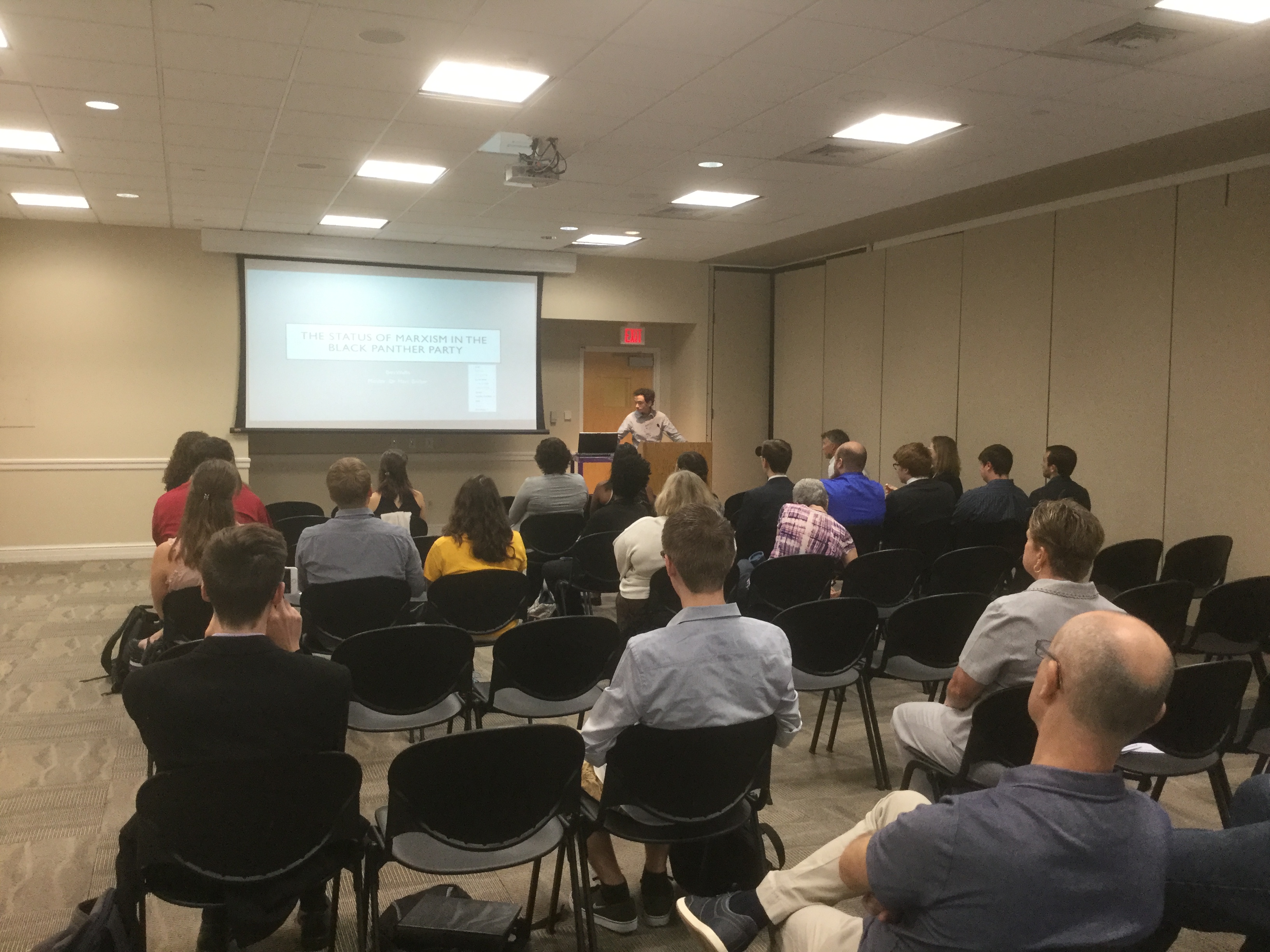
Senior History and Political Science double major Ben Wallis presented his summer TruScholars research “The Status of Marxism in the Black Panther Party” at the Summer Research Symposium on August 26, 2017. Founded in 1966 during a period of racial upheaval, war, and widespread disillusionment with the United States government, the Black Panther Party articulated a political program that broke with the liberal-oriented civil rights movement, promoting instead Black nationalism and anticapitalism. Wallis explored how the writings of Karl Marx, Vladimir Lenin, Mao Zedong, and Malcolm X were of particular importance in shaping their ideology. He argues that the Panthers can be understood as one of the most important Marxist-inspired movements in United States history.

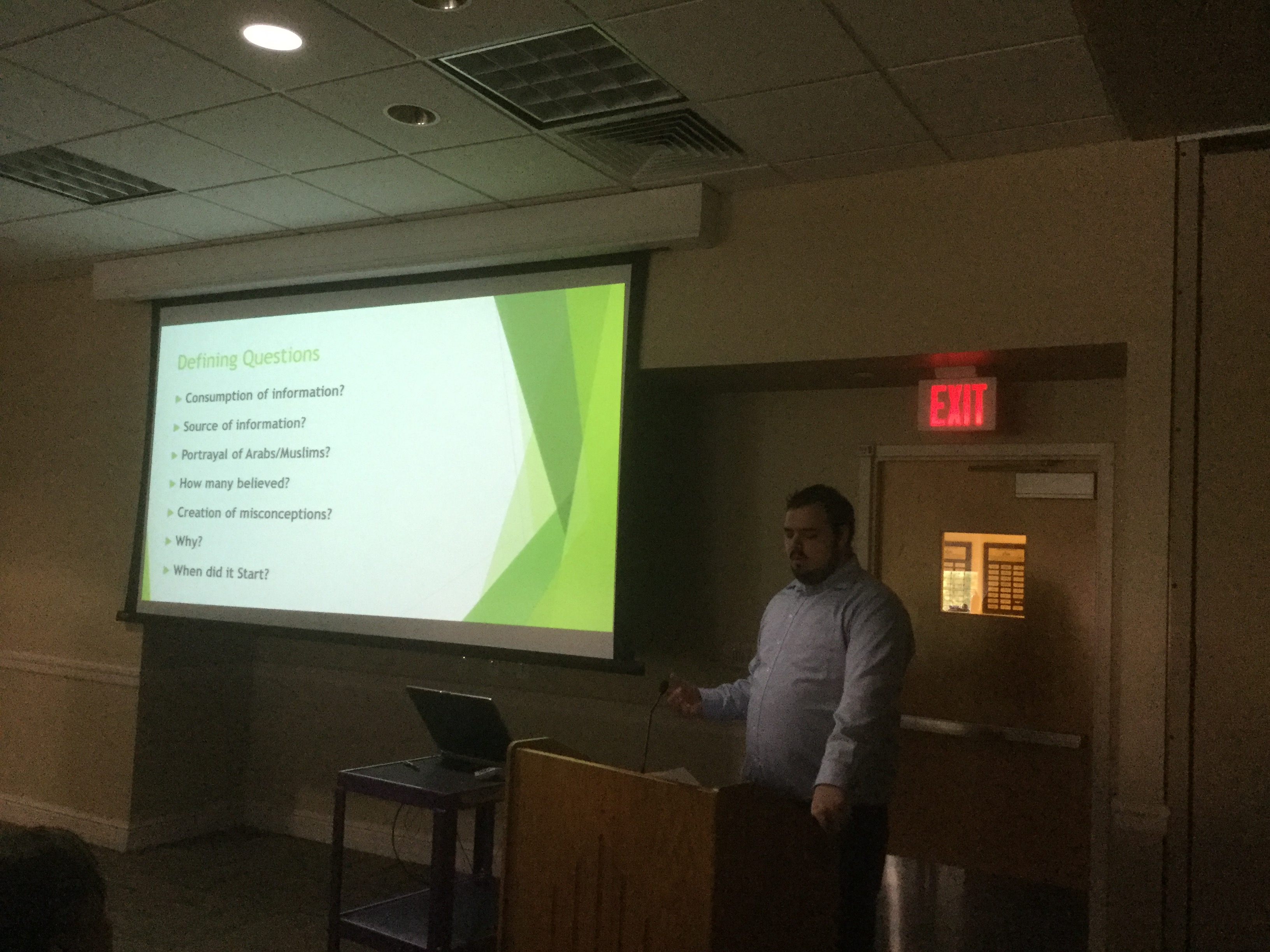
Travis Rolstead presented his paper “Backward and Diseased: American Perceptions of Arabs and Muslims in the Era of the First Arab-Israeli War.” Rolstead examined the extent and nature of coverage of the Arab-Israeli conflict in American national and regional newspapers during the late 1940s. He found that media coverage heavily favored the Jewish-Israeli cause. Articles favorable to the Israeli cause outnumbered those favoring the Palestinian Arab one. Similarly, the media regularly conflated the terms Arab and Muslim, ignoring the presence of non-Muslim Arabs, and generally portrayed Arabs and Muslims in negative and stereotypical terms.

The FBI in Latin America

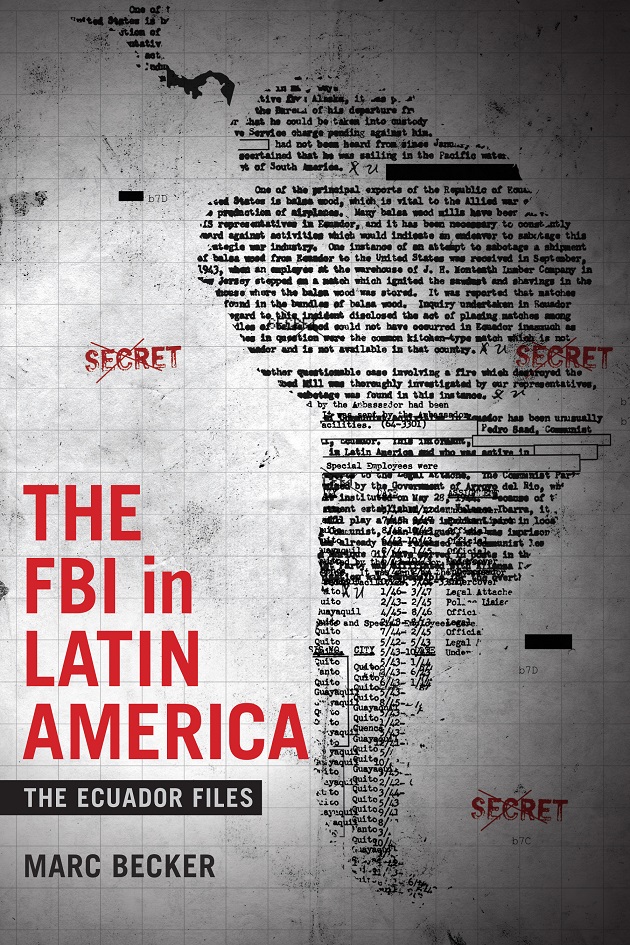
History professor Marc Becker has published a new book, The FBI in Latin America: The Ecuador Files (Duke University Press), which tells the largely unknown story of the FBI’s surveillance operations in Latin America during the 1940s and provides new insights into leftist organizations and the nature of the U.S.’s imperial ambitions in the western hemisphere.

The FBI in Latin America is an absolutely fascinating and pathbreaking introduction to the work of US intelligence and of political intervention and surveillance in Ecuador and Latin America more generally. Only a scholar with Marc Becker’s impressive knowledge of Ecuador could undertake a project that opens up the volume of data, factual information, and internal disputes and private conversations as found in the FBI’s wartime files as a vital new source for historians of leftist and communist movements in Latin America.” —Barry Carr, coeditor of The Cuba Reader: History, Culture, Politics

For more information, and to order the book, please visit dukeupress.edu/the-fbi-in-latin-america.

Twentieth-Century Latin American Revolutions

Latin American RevolutionsProfessor of History Marc Becker has published a textbook Twentieth-Century Latin American Revolutions with the assistance of his students in his Latin American Revolutions classes from the Fall 2015 and Fall 2016 semesters. He wrote the book because Latin American Revolutions is a commonly taught course at Truman and elsewhere, but no synthetic text exists for the subject. The book is built around a series of case studies: the 1910–1920 Mexican Revolution; the 1944–1954 Guatemalan Spring; the 1952–1964 MNR-led revolution in Bolivia; the Cuban Revolution that triumphed in 1959; the 1970–1973 Chilean path to socialism; the leftist Sandinistas in Nicaragua in power from 1979–1990; failed guerrilla movements in Colombia, El Salvador, and Peru; and the Bolivarian Revolution in Venezuela after Hugo Chávez’s election in 1998.

Spring history lectures

Early-Vreeland Lecture: Thursday, March 23, 2017, 7:00 pm, VH1000. Richard Wolff, Professor of Economics Emeritus, University of Massachusetts, Amherst, will discuss how capitalism can be overcome through increased democracy using the recent global economic crisis as an example. Wolff’s approach will help explain recent problems with globalization, including the current populist backlash that is sweeping the world.

Kohlenberg-Towne Lecture: Tuesday, April 4, 2017, 7:30 pm, SUB 3200.  Saul Cornell, speaking on “Race and The Second Amendment.”  Prof. Cornell, Paul and Diane Guenther Chair in American History at Fordham University, author of A Well-Regulated Militia: The Founding Fathers of the Origins of Gun Control in America, will explore the complex connections between race and the Second Amendment by examining the constitutional arguments over the right to bear arms in relation to slavery, the Fourteenth Amendment, and the Reconstruction Era.