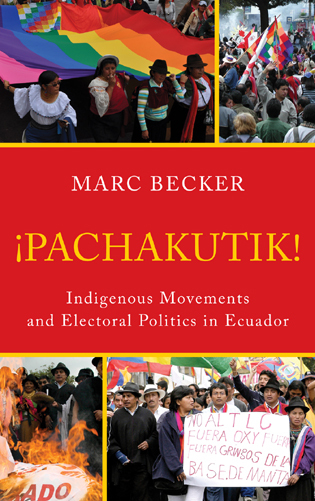
Pachakutik: Indigenous Movements and Electoral Politics in EcuadorMarc Becker has published Pachakutik: Indigenous Movements and Electoral Politics in Ecuador with Rowman & Littlefield.

This authoritative book provides a deeply informed overview of one of the most dynamic social movements in Latin America. Focusing on contemporary Indigenous movements in Ecuador, leading scholar Marc Becker traces the growing influence of the Confederation of Indigenous Nationalities of Ecuador (CONAIE), which in 1990 led a powerful uprising that dramatically placed a struggle for Indigenous rights at the center of public consciousness. Activists began to refer to this uprising as a “pachakutik,” a Kichwa word that means change, rebirth, and transformation, both in the sense of a return in time and the coming of a new era. Five years later, proponents launched a new political movement called Pachakutik to compete for elected office. In 2006, Ecuadorians elected Rafael Correa, who many saw as emblematic of the new Latin American left, to the presidency of the country. Even though CONAIE, Pachakutik, and Correa shared similar concerns for social justice, they soon came into conflict with each other.

Becker examines the competing strategies and philosophies that emerge when social movements and political parties embrace comparable visions but follow different paths to realize their objectives. In exploring the multiple and conflictive strategies that Indigenous movements have followed over the past twenty years, he definitively documents the recent history and charts the trajectory of one of the Americas’ most powerful and best organized social movements.

Ling Uses Sabbatical for Research and Tour

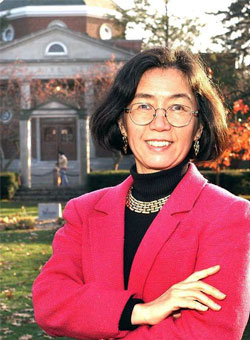
Huping Ling, professor of history and executive editor for the Journal of Asian American Studies, served as a visiting professor of history at the University of Missouri-Columbia during the 2009-2010 academic year, where she was actively engaged in a variety of research and service activities.

Ling interviewed Asian Americans in Mid-Missouri, researched in area archives and museums and wrote a book manuscript entitled “Chinese Chicago: Race, Transnational Migration, and Community.” Additionally, Ling gave public lectures on Asian American studies to classes and student organizations at the University of Missouri-Columbia, public schools and libraries, as well as to community organizations. She also presented papers at national and international professional conferences and conducted a lecture tour in Asian countries.

In May 2010, Ling was invited to give a lecture tour as a Distinguished Lecturer on various topics on Asian American studies at universities, research institutions and government agencies in Asian countries including Singapore, Malaysia, China and Korea.

The topics of Ling’s lectures included “The Rise of China as Reflected in the Changing Images of the Chinese Americans,” and a lecture series on the following topics: “The Critical Issues of Asian American Studies,” “A Critical Review of Chinese American Women Studies,” “Cultural Community—A New Theory on Ethnic American History,” “Rethinking Transnationalism: Ethnic Networking and the Overseas Chinese Communities” and “Chinese Chicago: Connections between the Transnational Communities and the Native Places.”

From Truman Today

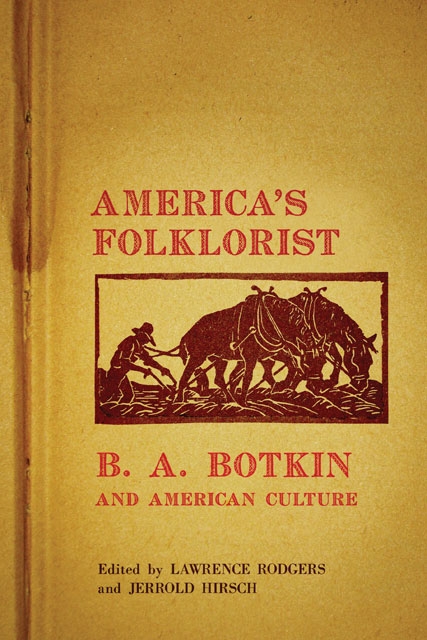
Hirsch, America’s Folklorist

Jerry Hirsch has published the edited volume (with Lawrence Rodgers) America’s Folklorist: B. A. Botkin and American Culture (Norman: University of Oklahoma Press, 2010).

Folklorist, writer, editor, regionalist, cultural activist—Benjamin Albert Botkin (1901–1975) was an American intellectual who made a mark on the twentieth century, even though most people may be unaware of it. This book, the first to reevaluate the legacy of Botkin in the history of American culture, celebrates his centenary through a collection of writings that assess his influence on scholarship and the American scene.

Through his work with the Federal Writers’ Project during the New Deal, the Writers’ Unit of the Library of Congress Project, and the Archive of American Folksong, Botkin did more to collect and disseminate the nation’s folk-cultural heritage than any other individual in the twentieth century. This volume focuses on Botkin’s eclectic but interrelated concerns, work, and vision and offers a detailed sense of his life, milieu, influences, and long-term contributions.

Just as Botkin boldly cut across the boundaries between high and low, popular and folk, this book brings together reflections that range from the historical to the philosophical to the disarmingly personal. One group of articles looks at his career and includes the first extended analysis of Botkin’s poetry; another probes the fruitful relationships Botkin had with leading musicologists, composers, poets, and intellectuals of his day. This is also the first book to bring together a collection of Botkin’s best-known writings, giving readers an opportunity to appreciate his wide-ranging mind and clear, often memorable prose.

For Botkin, the blurring of art and science, literature and folklore was not just a philosophy but a way of life. This book reflects that life and invites fans and those new to Botkin to appraise his lasting contributions.

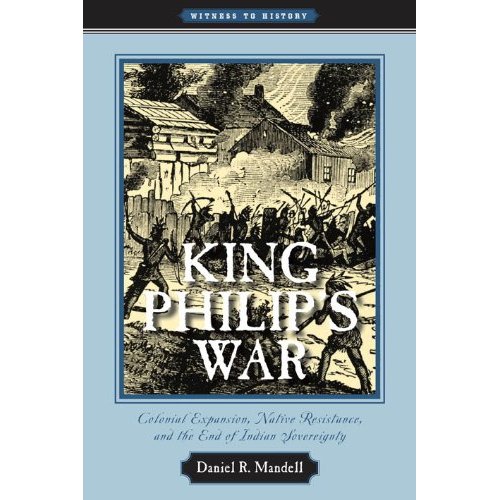
Mandell, King Philip’s War

Johns Hopkins University Press has published Dan Mandell’s new book King Philip’s War: Colonial Expansion, Native Resistance, and the End of Indian Sovereignty.

King Philip’s War was the most devastating conflict between Europeans and Native Americans in the 1600s. In this incisive account, award—winning author Daniel R. Mandell puts the war into its rich historical context.

The war erupted in July 1675, after years of growing tension between Plymouth and the Wampanoag sachem Metacom, also known as Philip. Metacom’s warriors attacked nearby Swansea, and within months the bloody conflict spread west and erupted in Maine. Native forces ambushed militia detachments and burned towns, driving the colonists back toward Boston. But by late spring 1676, the tide had turned: the colonists fought more effectively and enlisted Native allies while from the west the feared Mohawks attacked Metacom’s forces. Thousands of Natives starved, fled the region, surrendered (often to be executed or sold into slavery), or, like Metacom, were hunted down and killed.

Mandell explores how decades of colonial expansion and encroachments on Indian sovereignty caused the war and how Metacom sought to enlist the aid of other tribes against the colonists even as Plymouth pressured the Wampanoags to join them. He narrates the colonists’ many defeats and growing desperation; the severe shortages the Indians faced during the brutal winter; the collapse of Native unity; and the final hunt for Metacom. In the process, Mandell reveals the complex and shifting relationships among the Native tribes and colonists and explains why the war effectively ended sovereignty for Indians in New England.

Huping Ling Named Executive Editor of Journal of Asian American Studies

The Association of Asian American Studies has named Huping Ling, Professor of History, Editor-Elect and, in April 2009, Executive Editor of the Journal of Asian American Studies (JAAS), the premier refereed journal in the field of Asian American Studies, after a careful process of nomination and selection.

The academic discipline of Asian American and Pacific Islander Studies is a thriving and vibrant field of interdisciplinary research, teaching, and activism. There are Asian American and Pacific Islander Studies programs and departments in over 50 institutions nationwide, from public universities to private institutions. JAAS is published by the Johns Hopkins University Press, and is in the 25% of 300 journals on the electronic database Project Muse, in terms of the number of times accessed, indicating the strong presence of the journal in shaping the discipline. As the official publication of the organization, JAAS is a prestigious journal with an acceptance rate of 10 percent. The publication of an article in the journal often leads to book contract and tenure/promotion for faculty members. The editors have been selected from leading senior scholars with significant contributions to the field. Ling has authored and edited ten books on Asian American studies.

Professor Rick Bonus, President of the Association for Asian American Studies (AAAS), has written a thank you letter to Dr. Douglass Davenport, the Dean of College of Arts and Sciences, and Professor Steven Reschly, Chair of the History Department, to express the Association’s deep appreciation for their support of Professor Ling. “We know how crucial it is for Professor Huping Ling to be supported by her institution as she assumes this major professional responsibility, and we thank you for your trust in her. Professor Huping Ling is a highly respected scholar; our confidence in her is reflected in the unanimous approval by the executive board of the association of her impressive application for the position of Editor-Elect of the journal. Truman State University’s support of Professor Ling’s service to JAAS enlarges the reach of our institutional network.”

Daniel Mandell awarded 2008 OAH Levine Prize for Best Book in American Cultural History

Daniel R. Mandell, Truman State University, has been selected by the Organization of American Historians (OAH) to receive the inaugural Lawrence W. Levine Award, which is given annually for the best book in American cultural history.  On Saturday, March 29, OAH President Nell Irvin Painter and President-Elect Pete Daniel will present the award in New York City during the 101st Annual Meeting of the Organization.

Tribe, Race, History: Native Americans in Southern New England, 1780-1880 (The Johns Hopkins University Press) examines how cultures survive–how culture is contested, revised, transformed and passed on. It looks specifically at New England Indian tribes and their efforts to maintain cultural traditions and political identities and rights in the volatile, aggressive American marketplace from the early Republic through Reconstruction. Mandell uses a broad range of sources to establish how Native Americas used the resources American culture presented–commerce, religion, politics, fiction, folklore–to maintain a sense of distinctiveness and tradition. The book offers a synthetic account not just of Native American survival, but of the ways people negotiate power. The committee admired the depth and extent of research, and the humanist sensibility that marked the writing. In its emphasis on subaltern people’s struggling in myriad ways to create a culture that gave full range to their sense of who they were, Mandell’s book most clearly reflects the legacy of Lawrence W. Levine.

Founded in 1907, OAH is the largest learned society and professional organization dedicated to the teaching and study of the American past. OAH promotes excellence in the scholarship, teaching, and presentation of American history, and encourages wide discussion of historical questions and equitable treatment of all practitioners of history. Members in the U.S. and abroad include college and university professors; students; precollegiate teachers; archivists, museum curators, and other public historians employed in government and the private sector.

For information:

http://www.oah.org
http://www.oah.org/about/contact.php
Phone: 812-855-7311